






Credit:
Crissy Robinson
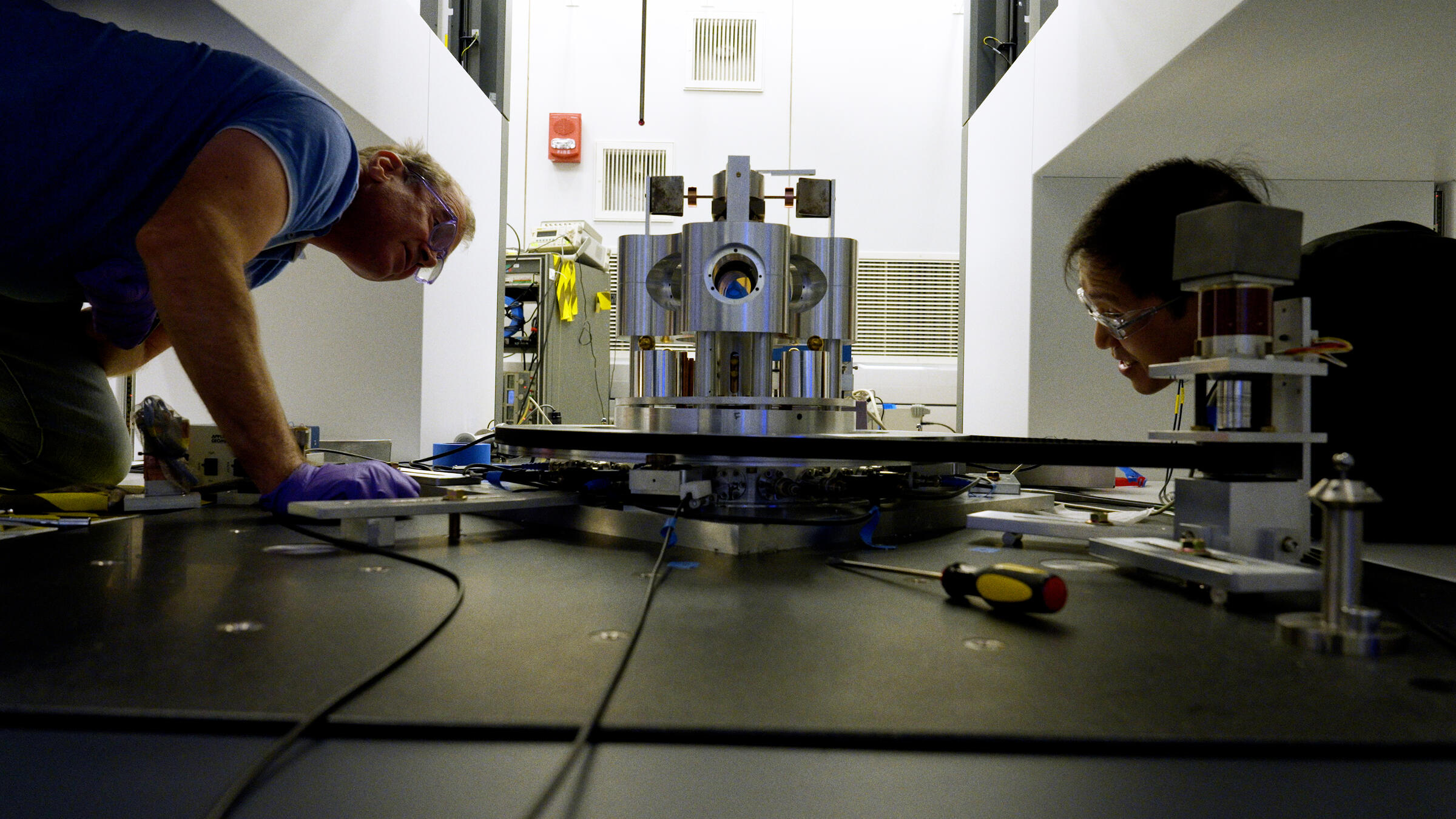
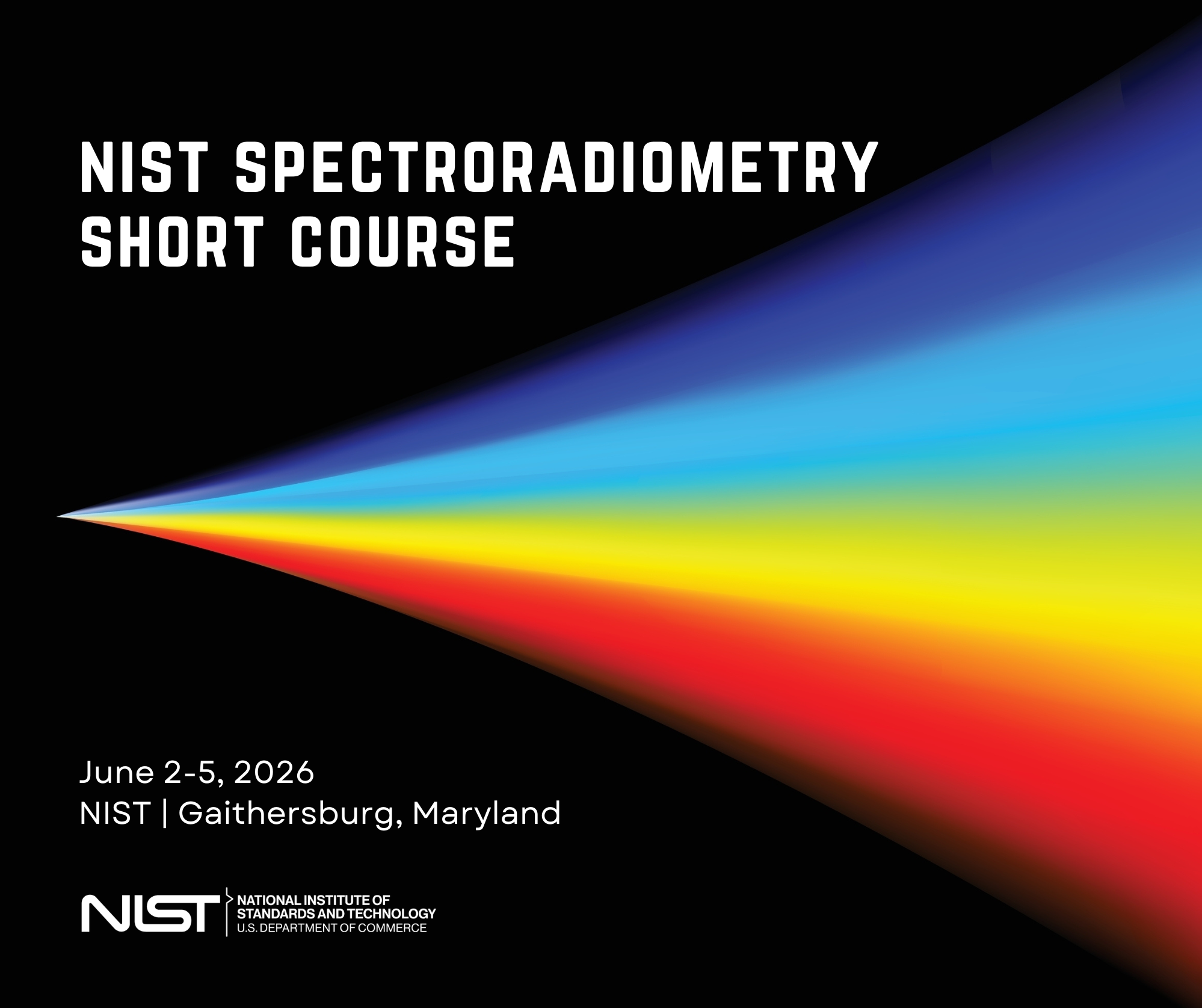
The NIST Spectroradiometry Short Course is a 4-day course held at NIST Gaithersburg, Maryland. It consists of 15 lectures given by NIST scientists and 3 hands-on laboratory experiences. Topics covered include the concepts behind radiometry, the performance and selection criteria for sources and detectors, the determination of uncertainties, the traceability of NIST’s calibrations, and the cutting-edge uses of hyperspectral imaging. In the laboratory classes, attendees calibrate an array spectroradiometer, find the spectral power responsivity of a filter radiometer, and transfer spectral irradiance to radiance using a plaque. Participants also have the opportunity to discuss their own calibrations with NIST calibration experts and to tour NIST facilities.
Lecture topics:
- Basics of Radiometry
- Source-based Radiometry: Blackbodies, lamps, and sphere sources
- Detector-based Radiometry: Spectral Responsivity
- Measurement Equation: Filter radiometers and optics
- Dispersive Spectroradiometry
- Properties of Detectors
- Array spectrometers
- Determining Measurement Uncertainties Part I
- UV Spectroradiometry
- Photocurrent measurements
- Hyperspectral Imaging Part I: Fundamentals
- Properties of LED sources
- Properties of Materials: BRDF and Reflectance
- Hyperspectral Imaging Part II: Applications
- Determining Measurement Uncertainties Part II