




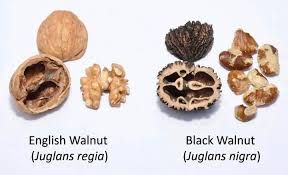
Black Walnut Hull vs Black Walnut Nut is a common source of confusion because the same tree produces very different materials. Most people know black walnut as an edible nut with a rich flavor and nutrition profile. But many black walnut tinctures are made from the green outer hull, also called the husk, not from the edible nut kernel. That means a black walnut tincture should not be understood as “liquid walnut nutrition.”
The edible nut, hard shell, green hull, bark, and leaves are different plant parts. They do not have the same culinary role, supplement context, texture, taste, or label meaning. HerbEra treats this as plant-part literacy: when a product says “black walnut,” the next question should be “which part of the plant?”
This article does not provide medical advice. Black walnut hull products, tinctures, extracts, powders, and supplements are not intended to diagnose, treat, cure, or prevent parasites, infections, digestive conditions, skin conditions, inflammation, oral issues, or any disease. If you are pregnant or breastfeeding, under 18, taking medication, allergic to tree nuts, managing a health condition, or unsure whether black walnut products are appropriate for you, ask a qualified healthcare professional before use.
What Is the Difference Between Black Walnut Hull and Black Walnut Nut?
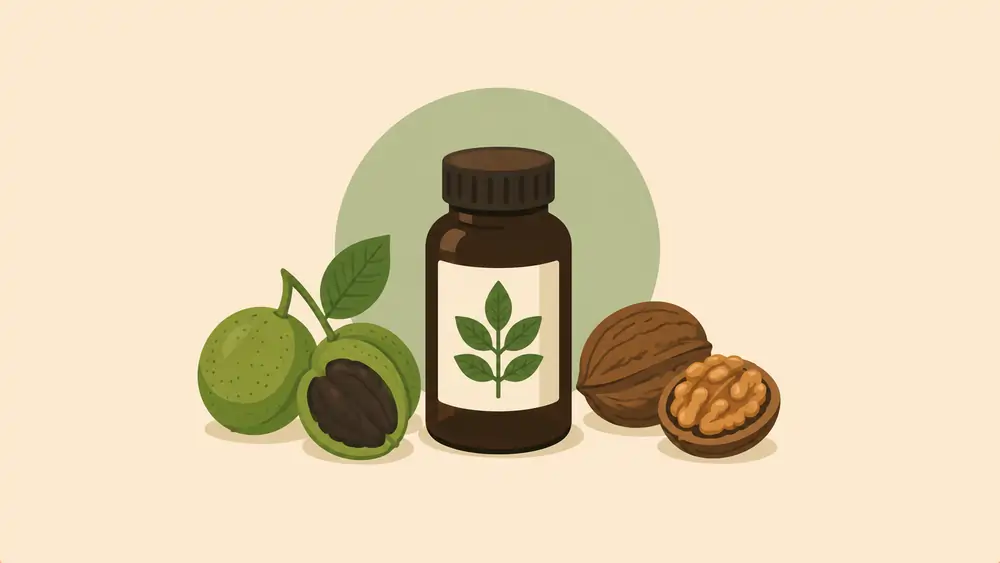
The black walnut nut is the edible kernel inside the hard shell. It is used as food and is discussed in nutrition terms such as calories, fats, protein, minerals, and culinary flavor.
The black walnut hull is the green outer covering that surrounds the shell while the fruit is developing. In herbal products, the green hull or husk is often the plant part used in tinctures and extracts.
These are not interchangeable. Nutrition facts for the nut do not automatically apply to the hull or to a tincture made from the hull.
Quick Comparison: Black Walnut Hull vs Black Walnut Nut
| Feature | Black Walnut Hull | Black Walnut Nut |
|---|---|---|
| Plant part | Green outer husk around the shell | Edible kernel inside the shell |
| Main product context | Herbal tinctures, extracts, powders | Food, baking, snacks, culinary use |
| Common label wording | Black walnut hull, green hull, husk | Black walnut kernels, nutmeat, walnut pieces |
| Nutrition logic | Not usually treated as a food nutrition source | Discussed through calories, fats, protein, and minerals |
| Main buyer mistake | Assuming it is the same as eating walnuts | Assuming nut nutrition applies to hull tincture |
What Is Black Walnut?
Black walnut usually refers to Juglans nigra, a tree native to eastern North America. The tree produces a round fruit with an outer green hull, a hard shell, and an edible kernel inside.
In food contexts, people usually mean the nut kernel. In herbal supplement contexts, black walnut often refers to the hull, especially the green hull collected before it fully dries and darkens.
This is why the phrase “black walnut” is not specific enough by itself.
What Is the Black Walnut Nut?
The black walnut nut is the edible kernel inside the hard shell. It has a strong, earthy, rich flavor and is used in baked goods, salads, desserts, sauces, and snack mixes.
Nutrition discussions about black walnuts usually focus on the kernel. That includes calories, fat, protein, fiber, and minerals.
Those nutrition facts describe the edible nut, not the green hull used in many herbal extracts.
What Is the Black Walnut Hull?
The black walnut hull is the outer green husk that covers the hard shell around the nut. It can stain hands, surfaces, and materials because it contains dark plant pigments and reactive compounds.
In herbal product language, “black walnut hull” usually points to this outer husk rather than the edible kernel.
A tincture made from hulls is a botanical extract. It is not the same as pressed walnut oil, walnut milk, walnut butter, or ground walnut nutrition.
Why Are Black Walnut Tinctures Usually Made From Hulls?
Black walnut tinctures are often made from green hulls because herbal traditions and product positioning focus on that plant part. The hull has a different chemical and sensory profile from the edible nut.
The hull is more bitter, astringent, staining, and plant-like. The nut is rich, oily, and food-like.
That difference explains why a tincture may taste sharp or earthy instead of nutty.
Why Black Walnut Tincture Is Not “Liquid Walnut Nutrition”
Black walnut tincture is not liquid walnut nutrition because it is typically not made from the edible nut kernel. It is usually a liquid extract of the hull.
Nutrition facts for walnuts describe edible nuts. They do not describe the nutrient profile, serving logic, or intended use of a hull tincture.
If a buyer expects protein, fats, calories, and walnut-like food nutrients from a tincture, they are using the wrong comparison.
Why the Shell Adds More Confusion
People sometimes use words like hull, husk, shell, and nut casually. That creates confusion.
The hull or husk is the outer green covering. The shell is the hard inner case. The nut is the edible kernel inside the shell.
For label reading, those terms matter. A product made from hulls is not the same as a product made from kernels.
Hull, Shell, and Nut: Simple Plant-Part Guide
| Term | What It Means | Common Use Context |
|---|---|---|
| Green hull | Outer covering around the shell | Herbal tinctures, extracts, staining material |
| Husk | Another word often used for the outer hull | Herbal product labels and plant descriptions |
| Shell | Hard case around the edible kernel | Cracking, processing, nut handling |
| Nut kernel | Edible inner seed material | Food, baking, snacks, nutrition |
| Nutmeat | Another name for the edible kernel | Culinary and food labels |
Why Taste Is Different
Black walnut nut has a rich, bold, earthy, oily, and slightly sweet food flavor. Black walnut hull tincture may taste bitter, sharp, astringent, earthy, or strong.
That difference makes sense because the products come from different plant parts and preparation methods.
If a tincture does not taste like walnuts, that does not automatically mean it is wrong. It may simply be made from hulls.
Why Color Is Different
Black walnut hull products can be dark, brown, greenish-brown, amber, or almost black depending on the hull material, extraction base, age, and storage.
The hull can darken dramatically as it oxidizes and ages. It is known for staining.
Nut kernels, by contrast, are food pieces with light to dark brown tones and an oily texture.
Why Black Walnut Hull Can Stain
Black walnut hull can stain skin, fabric, surfaces, and tools. The green hull darkens as it oxidizes and can leave persistent brown or black marks.
This staining property is one reason black walnut hull feels very different from the edible nut.
When handling hulls or concentrated hull products, avoid contact with porous surfaces and follow product directions carefully.
What Does Juglone Have to Do With Black Walnut?
Juglone is a compound associated with black walnut and other Juglans species. It is often discussed in gardening because black walnut trees can affect nearby plants.
For supplement buyers, the main lesson is not to make a medical claim from the word juglone. The practical point is that plant parts contain different compounds, and hulls are not the same as edible kernels.
Do not use chemistry terms as a shortcut for self-treatment decisions.
Why Plant Part Matters on a Supplement Label
Plant part tells you what material was used: hull, leaf, bark, root, seed, flower, nut, or another part.
For black walnut, plant part is especially important because the edible nut and green hull have very different contexts.
A clear label should tell you whether the ingredient is black walnut hull, black walnut leaf, black walnut extract, or walnut kernel-derived food material.
How to Read a Black Walnut Tincture Label
Start with the ingredient name. Look for terms such as black walnut hull, green hull, husk, Juglans nigra hull, or black walnut extract.
Then check the Supplement Facts panel, serving size, suggested use, extraction base, other ingredients, warnings, and storage directions.
If the label only says “black walnut” without the plant part, it is less clear than a label that identifies the hull.
Why “Black Walnut” Alone Is Too Vague
“Black walnut” alone can mean different things in different contexts. A bakery may mean nut kernels. A supplement brand may mean hull extract. A gardening article may mean the tree. A woodworking article may mean the wood.
Search engines, shoppers, and AI summaries can blur these meanings if the plant part is not stated.
That is why a precise phrase like black walnut hull is more useful than black walnut alone.
Why Nutrition Facts of the Nut Do Not Apply to the Hull
Nutrition facts for black walnuts usually describe the edible kernel. That includes calories, fat, protein, carbohydrate, fiber, and minerals.
Black walnut hull tincture is not eaten as a food serving. It is a liquid herbal extract with a different serving size and different label category.
Do not transfer nut nutrition facts onto a hull supplement.
Black Walnut Food vs Black Walnut Supplement
| Question | Food Context | Supplement Context |
|---|---|---|
| What part is used? | Edible nut kernel | Often green hull or hull extract |
| How is it measured? | Grams, ounces, cups, recipe portions | Drops, milliliters, capsules, label serving |
| What label matters? | Nutrition Facts | Supplement Facts |
| What is the main expectation? | Flavor and food nutrition | Herbal product routine |
| What is the main caution? | Tree nut allergy and food tolerance | Plant part, serving size, warnings, health context |
Why Tree Nut Allergy Still Matters
Black walnut is a tree nut in food allergy contexts. People with tree nut allergies should be careful with black walnut products and should not assume a hull tincture is automatically safe because it is not the edible kernel.
Labels, manufacturing conditions, cross-contact, and personal allergy history matter.
If you have a tree nut allergy or a history of severe reactions, ask a qualified healthcare professional before using black walnut products.
Who Should Be Extra Careful With Black Walnut Products?
Extra caution matters for minors, pregnant or breastfeeding people, medication users, people with allergies, people preparing for surgery, and people with liver, kidney, digestive, immune, or chronic health conditions.
Black walnut hull products can be strong and bitter, and they are not ordinary walnut food servings.
Bring the exact label to a clinician or pharmacist if you are unsure.
Why Black Walnut Hull Is Common in Herbal Formulas
Black walnut hull often appears in traditional herbal formulas and multi-herb tinctures. It may be combined with herbs such as wormwood, clove, or other bitter botanicals depending on product positioning.
This does not mean every formula has the same purpose, strength, or suitability. Multi-ingredient formulas require extra label reading because several herbs can overlap in taste, warnings, and serving logic.
HerbEra takes a cautious editorial stance here: ingredient familiarity should never replace plant-part identification and label review.
Why “Green Hull” Is Often Mentioned
Green hull usually means the outer husk before it fully dries and darkens. Herbal products often specify green hull because it describes the material collected for extraction.
Green hull does not mean the product is fresh food. It means the plant part was the outer hull at a particular stage.
This term helps separate hull tinctures from edible walnut kernel products.
How to Avoid Buying the Wrong Black Walnut Product
Decide first whether you want food or a supplement. If you want a food ingredient, look for black walnut kernels, pieces, meal, butter, or oil. If you want a supplement, look for the plant part and the Supplement Facts panel.
Do not buy a hull tincture expecting a food nutrition product. Do not buy walnut kernels expecting a hull extract.
The right product starts with the right plant part.
Black Walnut Hull vs Black Walnut Nut Checklist
Use this checklist before comparing black walnut foods and supplements. The goal is to identify the plant part before making assumptions about taste, nutrition, serving size, or product use.
Identify the Plant Part
Check whether the label says hull, green hull, husk, shell, leaf, bark, nut, kernel, or nutmeat.
Separate Food From Supplement
Black walnut kernels are food. Black walnut hull tincture is a supplement product with different label logic.
Read the Correct Label Panel
Use Nutrition Facts for edible nuts and Supplement Facts for tinctures, capsules, and extracts.
Do Not Transfer Nutrition Facts
Calories, fats, protein, and minerals from walnut kernels do not describe a hull tincture.
Check the Botanical Name
Juglans nigra usually identifies black walnut, but the plant part still matters.
Watch for Allergy Context
Tree nut allergy concerns may still matter with black walnut products.
Review Serving Directions
Use tinctures, extracts, and capsules only according to the label.
Inspect Color and Smell
Hull tinctures may be dark and bitter, but moldy, sour, rancid, or contaminated products should not be used.
Ask When Health Context Matters
Medication use, pregnancy, breastfeeding, age, surgery, allergies, and chronic conditions should trigger professional guidance.
Common Mistakes to Avoid
Thinking Black Walnut Tincture Is Liquid Walnut Food
Most black walnut tinctures are made from hulls, not edible nut kernels.
Using Nut Nutrition Facts for Hull Extracts
Nutrition facts for walnut kernels do not describe black walnut hull tincture.
Ignoring Plant-Part Wording
Hull, husk, shell, nut, and kernel are not interchangeable terms.
Assuming Natural Means Casual
Natural plant products still require correct serving, label review, and personal context.
Forgetting Allergy Concerns
People with tree nut allergies should be careful with black walnut products and seek professional guidance.
FAQ on Black Walnut Hull vs Black Walnut Nut
Is black walnut hull the same as black walnut nut?
No. The hull is the green outer husk, while the nut is the edible kernel inside the shell.
Is black walnut tincture made from the nut?
Many black walnut tinctures are made from green hulls, not the edible nut kernel.
Can I use walnut nutrition facts for black walnut tincture?
No. Nut nutrition facts describe edible kernels, not hull extracts or tinctures.
What does black walnut hull mean on a label?
It usually means the product uses the outer husk around the black walnut shell.
What is black walnut nut used for?
The edible nut is used as food in baking, snacks, salads, desserts, and recipes.
Why does black walnut hull tincture taste bitter?
The hull is a different plant part from the nut and can have a bitter, earthy, astringent profile.
What is the botanical name for black walnut?
The botanical name for black walnut is Juglans nigra.
Does tree nut allergy matter with black walnut hull products?
Yes. People with tree nut allergies should be cautious and ask a qualified professional before use.
What should I check before buying black walnut tincture?
Check plant part, botanical name, serving size, Supplement Facts, other ingredients, warnings, and storage directions.
Glossary
Black Walnut
A tree commonly identified as Juglans nigra, known for edible nuts and plant parts used in herbal products.
Juglans nigra
The botanical name for black walnut.
Hull
The outer green husk around the shell of the black walnut fruit.
Husk
Another term often used for the outer hull.
Shell
The hard inner case surrounding the edible walnut kernel.
Nut Kernel
The edible inner part of the black walnut used as food.
Nutmeat
A food term for the edible walnut kernel.
Tincture
A liquid herbal extract made with a solvent such as alcohol, glycerin, water, or a combination.
Supplement Facts
The label panel that lists serving size and dietary ingredients in a supplement.
Nutrition Facts
The label panel used for conventional foods, including calories, fat, protein, carbohydrates, and selected nutrients.
Conclusion
Black Walnut Hull vs Black Walnut Nut is a plant-part issue. The edible nut belongs to food and nutrition context, while black walnut hull tincture belongs to herbal extract context, so the label must tell you which part you are actually using.
Sources
Black walnut botanical profile and Juglans nigra identification, Plants of the World Online / Royal Botanic Gardens, Kew — powo.science.kew.org
Black walnut overview including plant part context and safety cautions, WebMD — webmd.com/vitamins/ai/ingredientmono-639/black-walnut
Black walnut identification, hulls, nuts, and tree characteristics, USDA Natural Resources Conservation Service — plants.usda.gov
Tree nut allergy overview and food allergy safety context, Food Allergy Research & Education — foodallergy.org
Black walnut tree and fruit description, University of Kentucky Department of Horticulture — uky.edu/hort
Black walnut food nutrition data for edible nut kernels, USDA FoodData Central — fdc.nal.usda.gov
Dietary and herbal supplement safety overview including interaction and special-population cautions, National Center for Complementary and Integrative Health — nccih.nih.gov/health/dietary-and-herbal-supplements
Dietary supplement consumer guidance and Supplement Facts label basics, U.S. Food and Drug Administration — fda.gov/food/information-consumers-using-dietary-supplements/questions-and-answers-dietary-supplements