




Credit:
Aleksey Matrenin/Shutterstock
When a major storm or wildfire hits, the headlines focus on the disaster. At NIST, we study what happens days, months and years later, after the headlines have faded away.
Resilience is what we call this long-term effort and associated actions. It’s a community’s ability to not only withstand a disruption but also recover its functions and services — such as schools, hospitals and shops — in a way that sustains its people and allows them to better prepare for future events. A community can be any geographic area with a leadership structure, from a school campus to an entire nation.
As a researcher focusing on community resilience and recovery and acting lead of NIST’s Community Resilience Group, I see firsthand how crucial it is for neighborhoods to be prepared for the unexpected. From the increasing frequency of extreme weather events to other unforeseen disruptions, our communities are facing more challenges than ever before.


But here’s the good news: Building a more resilient community isn’t just the job of city planners or emergency managers. It starts with us — with you, me and our neighbors. By exploring how communities plan for and address various types of hazards, my work has shown me that true resilience is a blend of strong social ties and thoughtful planning.
You may have wondered how to best prepare for a natural disaster before it strikes. The good news is you can anticipate challenges and take steps in advance to prepare yourself before disaster strikes. And guess what? Many of these steps are surprisingly straightforward. Some, such as developing relationships with your neighbors, can even improve your everyday life.
Here are five actions you can take to help your family and your community prepare for disaster today:
1. Start Hyperlocal
Every community has its unique vulnerabilities. You should know yours. Are you in a flood zone? Is your area prone to extreme heat waves? Are you at risk for wildfires? Understanding these specific risks can help you prepare accordingly.
Action: Research your local government’s emergency preparedness resources. Following your local government on social media is a good place to start. Many municipalities offer online maps of flood zones, information on severe weather alerts and guidance on preparing for specific local hazards. For example, knowing if your home is susceptible to flash flooding can prompt you to clear storm drains regularly.
2. Harden Your Home (It’s Easier Than It Sounds)
Resilience doesn’t always require a significant renovation. NIST research emphasizes that “nonstructural fixes” are cost-effective. Examples include elevating expensive appliances (such as furnaces and water heaters) above flood levels, installing surge protectors and ensuring proper drainage. These small steps can be the difference between a minor cleanup and major home damage and repairs. If you are a renter, work with the homeowner and consider the terms of your renter’s insurance.
3. Build Your ‘Social Capital’
NIST-funded studies show that “social capital” — the strength of neighborhood networks — is a top predictor of how quickly a community recovers from a disaster. That’s because when a crisis strikes, the first responders are sometimes not emergency services, but the people living next door.
Social cohesion is a powerful tool for resilience. If the power goes out, for example, who will check on older neighbors? How will you know who has extra batteries or a generator?
Action: Introduce yourself to the people living around you. Exchange contact information. Create a neighborhood group chat (WhatsApp, Signal or a simple email list will work) to share information and offer help during emergencies. Knowing who has what skills or resources can make a huge difference.
4. Prepare a Household Emergency Kit and Plan — Including a Digital Plan
Having a well-stocked emergency kit can mean the difference between coping comfortably and facing unnecessary hardship when services are disrupted.
Action: Assemble a kit with at least three days’ worth of water (one gallon per person per day) and nonperishable food. Don’t forget to include:
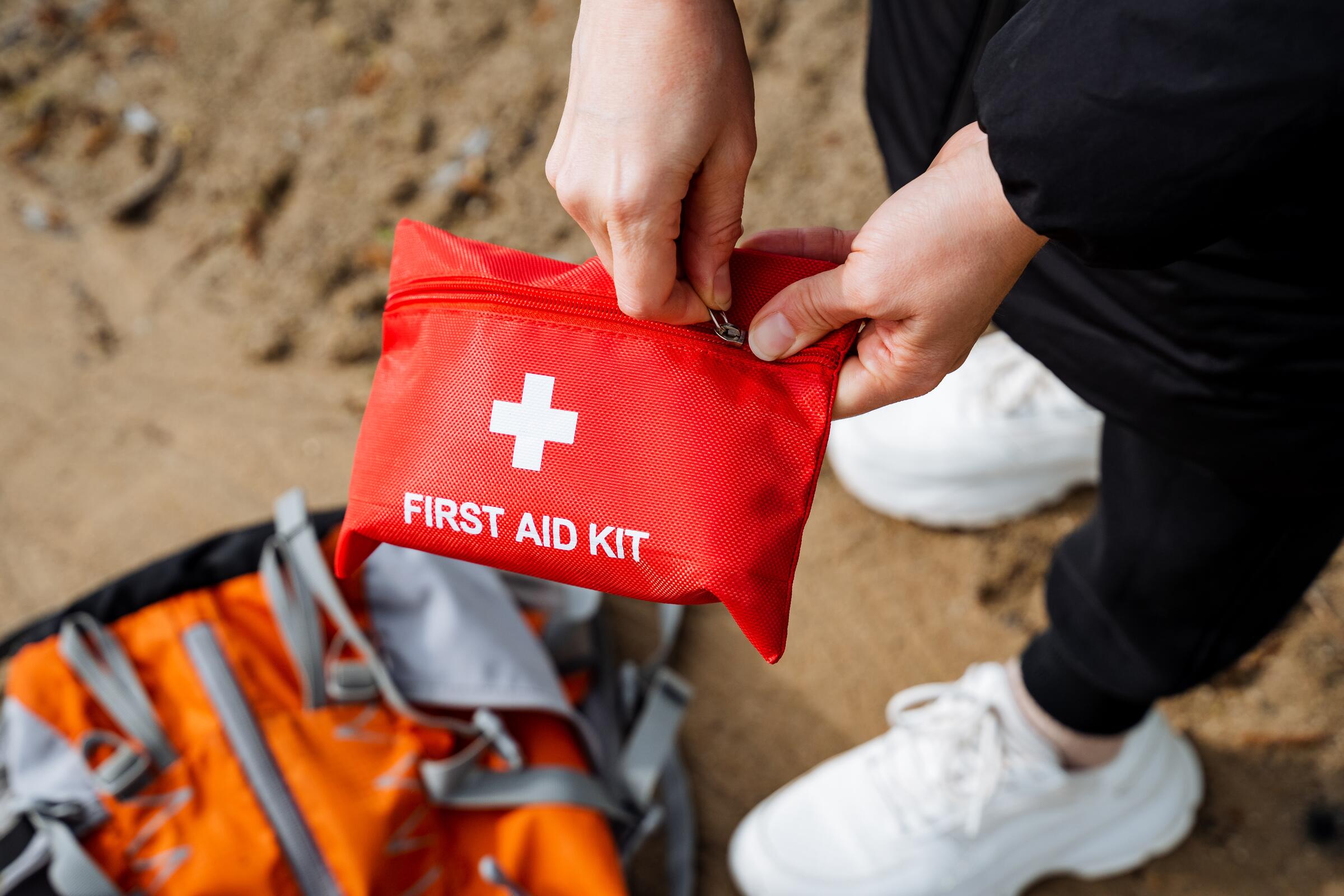
- A first-aid kit
- A battery-powered or hand-crank radio
- Flashlights
- Extra batteries
- A local map
- Any necessary medications
Beyond the kit, discuss and practice an emergency plan with your household: Where will you meet if separated? What are your evacuation routes?
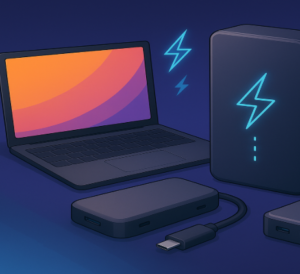
Additionally, households function much like small businesses. If businesses lose access to their IT systems, they can’t function. If you lose access to your electronic records, your recovery could also stall. With numerous insurance policies and other documents now stored on our devices, recovering digital records should be included in your disaster plan. You can also maintain a “digital go-bag” with encrypted backups of insurance policies, medical records and property deeds.
5. Participate in Local Planning Forums
Local resilience requires input from the people who live in the area.
Action: By attending town halls or joining a local Community Emergency Response Team, you ensure that your local officials are aware of your community’s priorities. This will help your local government plan for hazards according to everyone’s needs.
How a Disaster Researcher Prepares
As a resilience researcher, I don’t just recommend these preparedness practices — I use them with my own family.
We don’t have many earthquakes or wildfires here in Maryland, but we do experience power outages and the occasional snowstorm. So, those are the emergency types I prepare for.
One of the simplest steps I take is to keep a packed suitcase with clothes and other essentials, including backup phone chargers, for each family member. We could quickly grab this if we needed to leave.
Another consideration is critical family papers, such as passports and Social Security cards. I have a portable safe where I store these documents, so we have them immediately available in an emergency and can easily transport them.
Also, cash is a frequently overlooked item in emergency preparedness. In our increasingly cashless society, many of us are used to paying with credit cards or mobile wallets. But in an extended power outage, this might not be possible. So, I always make sure I have some money on hand to buy things in an emergency.
Unfortunately, many people don’t plan for pets when preparing for emergencies. Pets can be one of the greatest barriers to people evacuating in a timely fashion. I keep a kit in the trunk of my car with extra dog food and any other supplies our pup would need in case we have to evacuate.
How NIST Supports Community Preparedness
While neighbors helping each other in the aftermath of a disaster is crucial, NIST focuses on helping your community officials, households and other organizations prepare for a disaster before it strikes.
Rather than simply guessing how a community might respond to an event, we use detailed data modeling to predict its response. A benefit-cost “calculator” helps determine the most efficient way to prepare for a disaster, such as how to handle a flood-prone area.
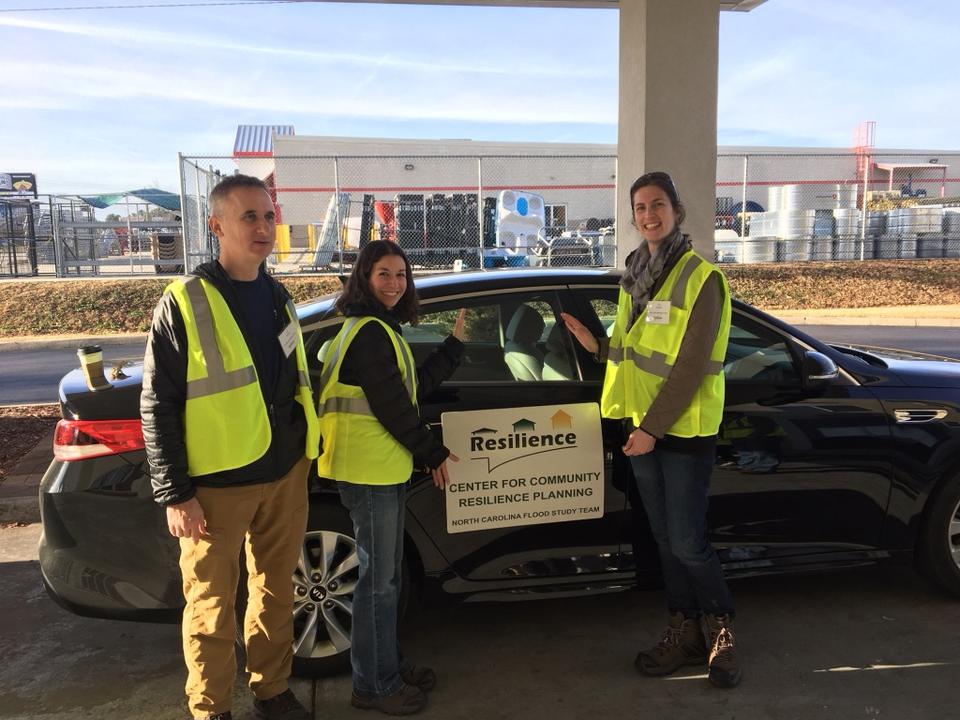
Our information helps communities plan for the most likely disaster scenarios. For example, after back-to-back hurricanes, we collaborated with the community of Lumberton, North Carolina, to track its resilience and recovery over several years.

Credit:
NIST
Lumberton’s local officials used our resources to plan a more flood-resistant water system for their city. Community leaders can also track their preparedness with our database of county-level resilience indicators, such as how fast a community can restore power to a given percentage of its population after a hurricane.
Our research has contributed to standards that help cities and counties make better building code decisions with disasters in mind. NIST conducts detailed research on natural disasters, such as the 2011 Joplin tornado. We learn lessons from these reports that have helped communities modernize their building codes to make buildings stronger in the face of tornadoes and other hazards.
Resilience Is Local
As I mentioned earlier, resilience isn’t just a task for your city or town’s officials and planning teams. It’s infused in actions we can each take. With NIST’s data and tools, combined with everyone’s individual efforts, resilience planning doesn’t have to be intimidating.
Hazards will always be present, but the NIST community resilience researchers are creating science-based, easy-to-use tools to empower communities to prepare for today’s disasters — and future ones.
Community Officials and Planners: Check Out Our Resilience Tools
All these resources and more are available on our Community Resilience webpage.