





Machined parts today carry more design intent than they did a decade ago. Products combine advanced geometries, mixed materials, and tighter tolerances, all while customers expect shorter lead times and smaller batch sizes. WayKen Rapid Manufacturing is one example of a mid-sized shop that has restructured its process planning and equipment around this shift instead of treating it as an exception to standard production.
Why Manufacturing Is Becoming More Complex
Products are being designed to include more function in less product. Aerospace products such as lightweight aircraft and drone parts require materials like aluminum and titanium alloy rather than traditional steel. The result is much thinner wall thicknesses, curvatures and many cavities internally where it can be difficult to fix or clamp the part for machining. In addition to sealing surfaces, thermal interfaces and modular housing assemblies create new tolerance requirements that were not present on a simple machine component with just a few flat surfaces.
At the same time, manufacturers’ ordering patterns have also changed. Shops no longer receive orders for large quantities of one part number. Rather they now receive orders for many different part numbers in smaller batch quantities commonly referred to as High-Mix Low-Volume (HMLV) production. It’s possible each part number will require a separate fixture, tool path and inspection procedure. This means the manufacturer needs to rapidly change over from one product to another. Additionally, shorter lead times make it even more difficult; whereas in the past, machinists had weeks to develop the required tolerances and finishes prior to production, today these complex geometry CNC machining requirements must typically be resolved in days.
Building Flexibility into Modern Manufacturing
Versatility occurs when various production processes are integrated instead of being limited to one. For example, a manufacturer that only has the capability to mill will find it difficult and expensive to manufacture deep internal cavities, threaded inserts and EDM-finish-cavities in the same part unless they outsource some portion of the build.
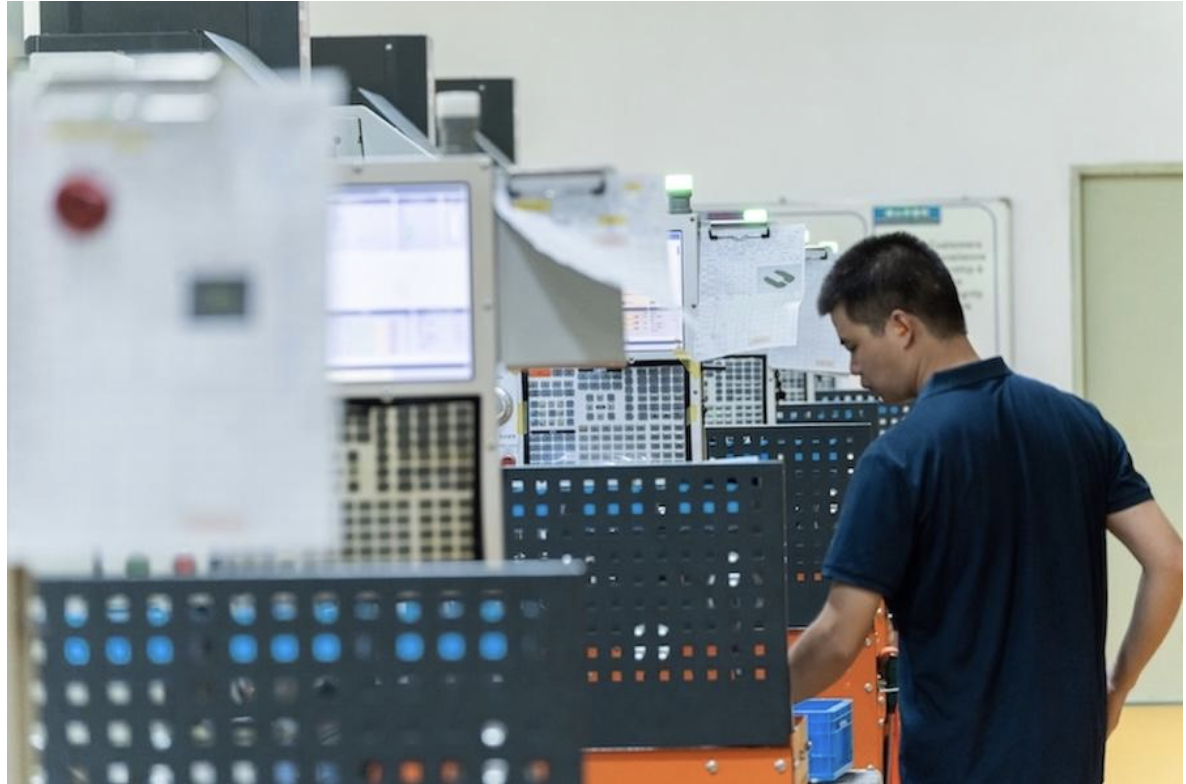
WayKen provides a solution to this problem by operating both 3- , 4-, & 5-axis milling and turning machines along with EDM & wire cutting capabilities all under one roof. This allows the seamless production of a single part containing multiple features without requiring the movement of the part between different manufacturers.
The above is most important with regards to parts having complex geometry CNC machining requirements that need a multi-setup component to access all surfaces. For example, WayKen produced a titanium drone camera housing that had machined features requiring up to five different flip-and-reclamp operations, along with T-shaped tooling to reach interior cavities while maintaining tight ±0.00025mm sealing groove tolerances.
For every reclamping, there is a potential to lose datum references, thus the machining sequence and fixture strategy has to be defined prior to making the first cut. Using 5-axis machining centers can reduce the numbers of re-clamping needed. However, the decision-making regarding the order of reclamps and other factors affecting the ultimate tolerance stack still requires input from someone knowledgeable about how clamping forces and machining sequences ultimately affect the tolerance stack.
Success Depends on More Than Advanced Equipment
Successful machining depends much more than the equipment used. A 5-axis machine will not make up for a poorly developed process plan. To hold a tolerance of ±0.005 mm on a critical feature, there is a need to have stable working conditions due to thermal expansion within the machine and the work piece. The thermal movement could result in dimension changes greater than the tolerance limits.
Many shops currently producing very precise parts with many maintaining their shop floor at temperatures controlled do so because they recognize that temperature fluctuations are large enough to alter the dimensions of parts being produced. These same shops use tool wear monitoring systems to identify when a tool has reached an unacceptable level of wear which would cause a hole or surface to be shifted outside of specification during production.
In addition to having environmental controls, tool wear monitors and using in-process measurement tools, WayKen Rapid Manufacturing incorporates early design reviews into its project management approach. These DFM reviews are used to identify potential problem areas prior to a job being scheduled. Wall thickness, draft angles, hole depths-to-diameter ratios and other factors are reviewed against the selected manufacturing material/process before a job is scheduled. Problems identified during this time can be addressed while the drawing is still subject to revision.
Conclusion
Rising production complexity is not solved by adding more machines. It requires planning fixture strategy, machining sequence, and environmental control around the specific part, then applying that discipline consistently across every job. Shops that treat these as standard practice, rather than special cases, are the ones keeping pace as designs get harder to hold.